
Air receivers
The cheapest efficiency you can buy
Correctly sized storage steadies your pressure, stops the compressor short-cycling and gives you a safety reserve — for a fraction of the cost of a bigger machine.
How to properly size an air receiver
Getting the receiver right is often the difference between a system that hunts all day and one that holds steady. Four things decide the size.
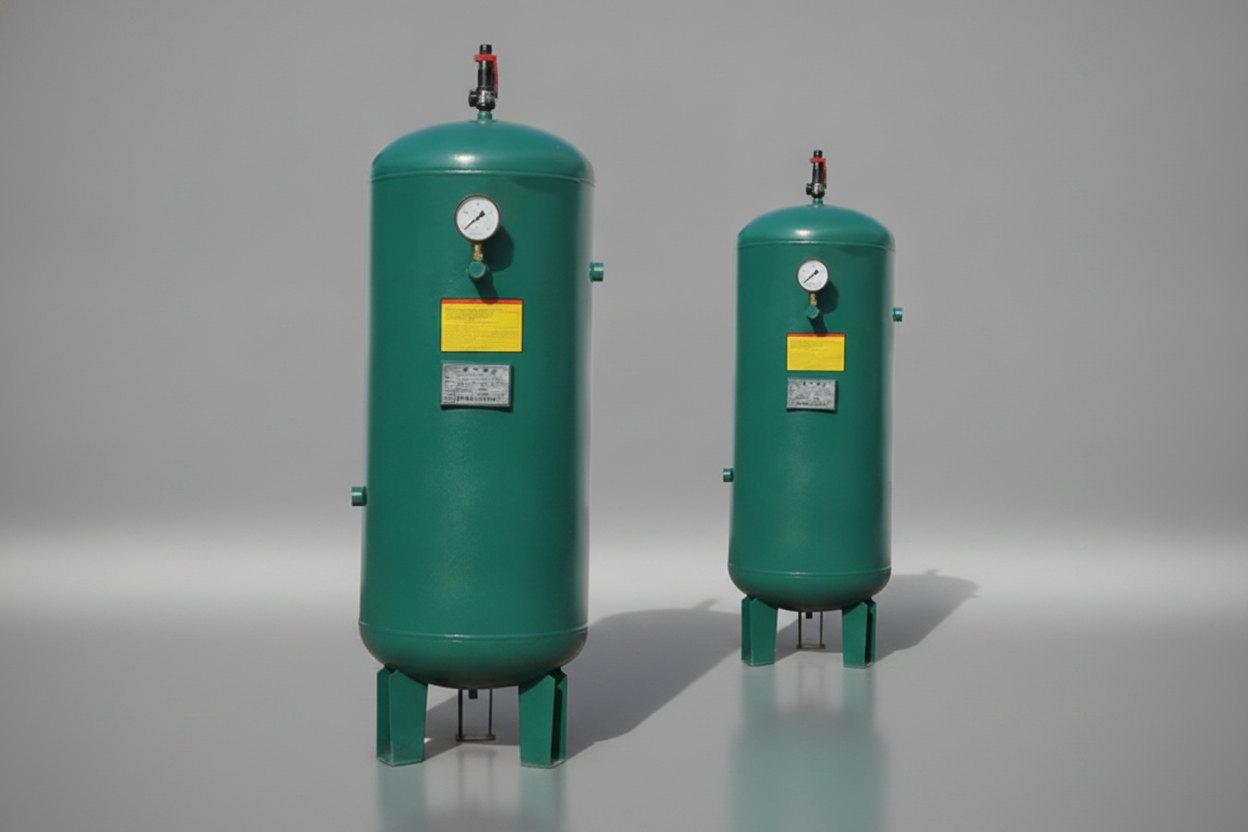
Storage · APD
Air Receiver
An air receiver — sometimes called a compressed air tank — is an integral part of any compressed air system. Its main job is to act as temporary storage that absorbs the peaks in demand from your system and keeps the running efficiency of your plant where it should be.
Enquire about this modelMinimising pressure fluctuations
A receiver smooths the pressure swings that would otherwise reach your process. Size it against two numbers: the compressor's output pressure, and what the application needs at the point of use. Stored air only counts while it still holds usable pressure.
Meeting short-term peaks
If demand swings through the day, those peaks have to be covered or pressure falls below what the process needs. A receiver holds the air the compressor alone cannot deliver in time. Your CFM and your expected peaks dictate the size.
Energy considerations
A receiver lets a load/unload compressor run longer cycles in a tighter pressure band, which cuts energy use. Size it generously and you avoid starting a trim compressor, stop the frequent motor starts, and get more life out of the machine.
Safety considerations
If it is ever needed, a receiver provides a supply of air that lets production processes and systems be shut down safely in an emergency.
Established
Two decades serving Pakistani industry
Years of experience
Held by our senior compressor technicians
Projects completed
Installations, overhauls and retrofits
Clients served
Textile, food, pharma, packaging and more



Shaffaf is an authorised partner for Elang, Hawacom and ALUP compressed air equipment in Pakistan.